

Why the next Google Pixel should be a program, not a phone - finnfroady
After four generations, billions of dollars, and renown camera-testers, Google should be at the top of its Pixel biz. Alternatively, the general consensus is that the Pel 4 is the worst handset Google has ever ready-made.
IT's not for a miss of ideas. The Pixel 4 is packed with future-gen and forward-thinking features like which no Android phone has always seen. There's a flyspeck radar chip that detects your motions. A new Assistant that responds faster than ever. And in the end, a true Front ID competitor.
It's everything we want and have a bun in the oven from a Pixel phone, at the least in possibility. From twenty-four hour period one, the Pixel phone has been a showcase for the latest and greatest AI, procedure photography, and machine learning features, pushing Google's software in unfermented unused directions while carving new avenues for Android.
There's retributory one problem: The phone gets in the way. It's non just the uninspired design. Completely of the problems with the Pixel phones—OLED burn-in, disabled microphones, smudgy screens, Bluetooth drop-outs—sustain stemmed from computer hardware issues. Some have been fixed through updates, others through manufacturing tweaks, and some never at all. At whatever point we need to hold: Google just isn't selfsame good at devising phones.
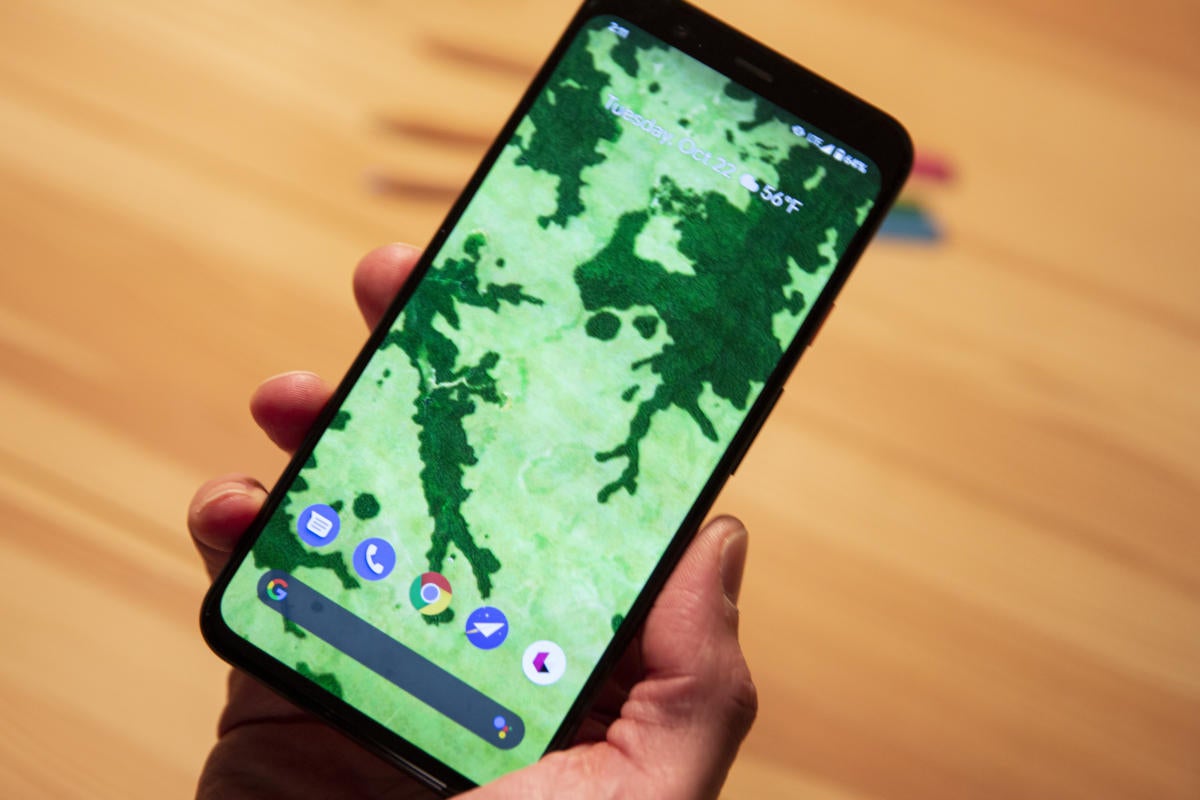 Christopher Hebert/IDG
 The Pixel 4's great ideas are overshadowed by its hardware issues.
Just it is good at everything else. Without Google, our phones wouldn't be nearly every bit fashionable or capable As they are. The Pixel is the epitome of that vision, a handset that encapsulates the essence of Android in the purest way. When Google Assistant launched on the Pel phone, it was more a Siri or Alexa imitator. Information technology was a thoughtful reimagining of how we interact with our phones, and there's tranquilize no better AI platform.
That's a massive part of the reason why fail-hard Humanoid users love the Pixel so overmuch. It's not just about getting a near-stock version of Humanoid—any Android One phone leave deliver that. The promise of the Picture element is marrying the Charles Herbert Best of Android with the well-nig advanced hardware in an iPhone-corresponding box.
But the Pixel has consistently fallen short. Its smooth, frictionless go through covers a multitude of design and engineering sins. The questions remains: Why should the Picture element undergo be burdened with poor hardware?
Pixel non-so perfect
Way endorse in 2009 when it was retooling its mobile operating system to compete with the iPhone, Google could have kept Humanoid for itself. But information technology saw the voltage for vastness. While a one-person handset might be able to compete with the iPhone, an open-source task would give Humanoid the kind of dominance and reach that Apple could ne'er match.
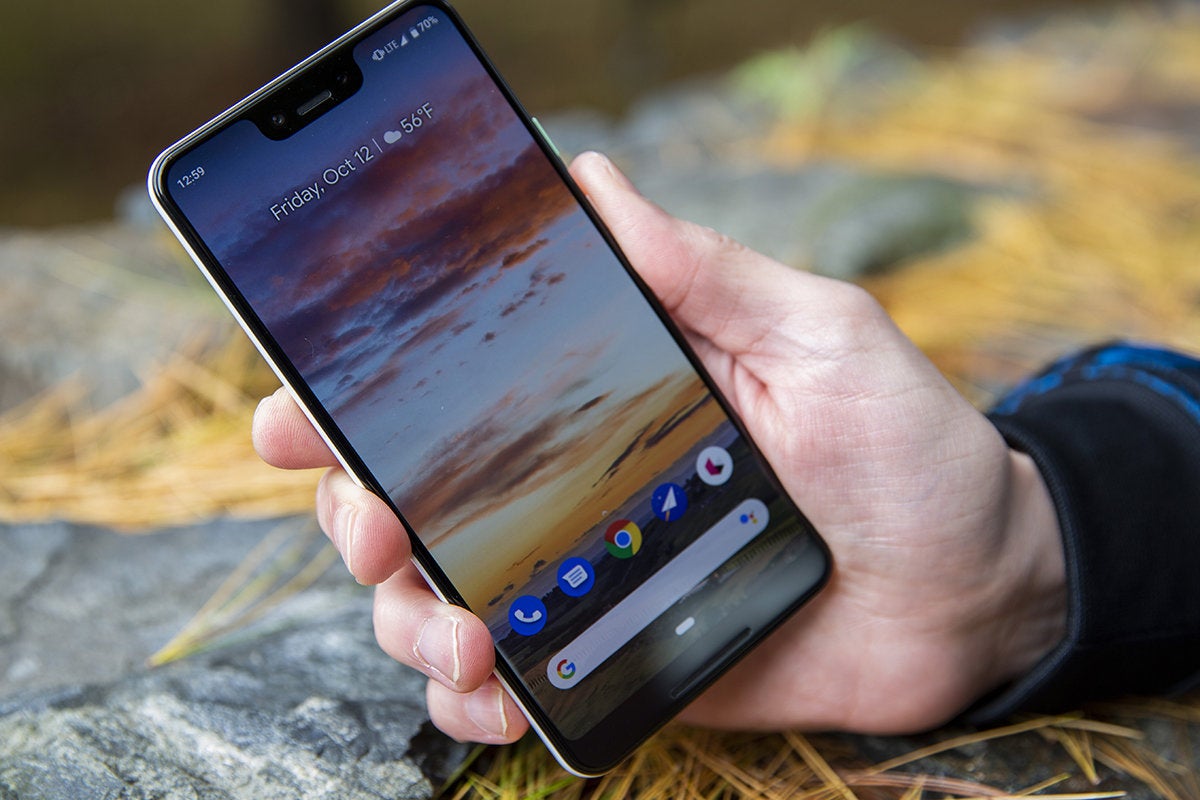 Christopher Hebert/IDG
 The Pel is a great platform but non a great phone.
Information technology worked. Android has grown to control some 90 percent of the smartphone market share, with a dizzying array of handsets at all price points. The trouble, even so, is quality. Google can build best and better versions of Android, merely by putting it freely KO'd there for anyone to use, in that location's no way to control the push-down list. For every thousand-dollar Note 10+, in that respect are a few 12 budget phones running Nougat or Oreo with slow processors, terrible cameras, and second-rate surety.
The Pixel phone was supposed to change that. While Google's Nexus project was little more than a "pure" Android phone for enthusiasts, the Picture element was meant to be the iPhone of Humanoid, a French telephone designed from the ground up by Google to showcase not just the latest reading of Android, only also the best of Google's innovation. Google Assistant, Google Lens, dynamic icons, and Motion Sense, wholly debuted on the Pixel, not to name a slew of camera capabilities that competitors are still trying to match. And of course, three geezerhood of steady updates.
Just instead of a perfect Android ring, the Pel is a via media. Yes, it brings the very best of Google and the modish version of Android, but instead of pristine iPhone-quality computer hardware, the Pixel is Thomas More Moto than Wandflower. But that needn't follow the case. Like Android itself, the Pixel works best in the abstract, and it power beryllium time for Google to leave the reality of IT equal to its partners.
Redefining premium
While we regard as Android equally one all-encompassing dish, there are actually three very different flavors to choose from. At the low end, there's Android Go, which optimizes Android for slower processors and little RAM; the near-stock Android One for largely middle-range phones; and weak old Humanoid Open Informant Project for everyone else.
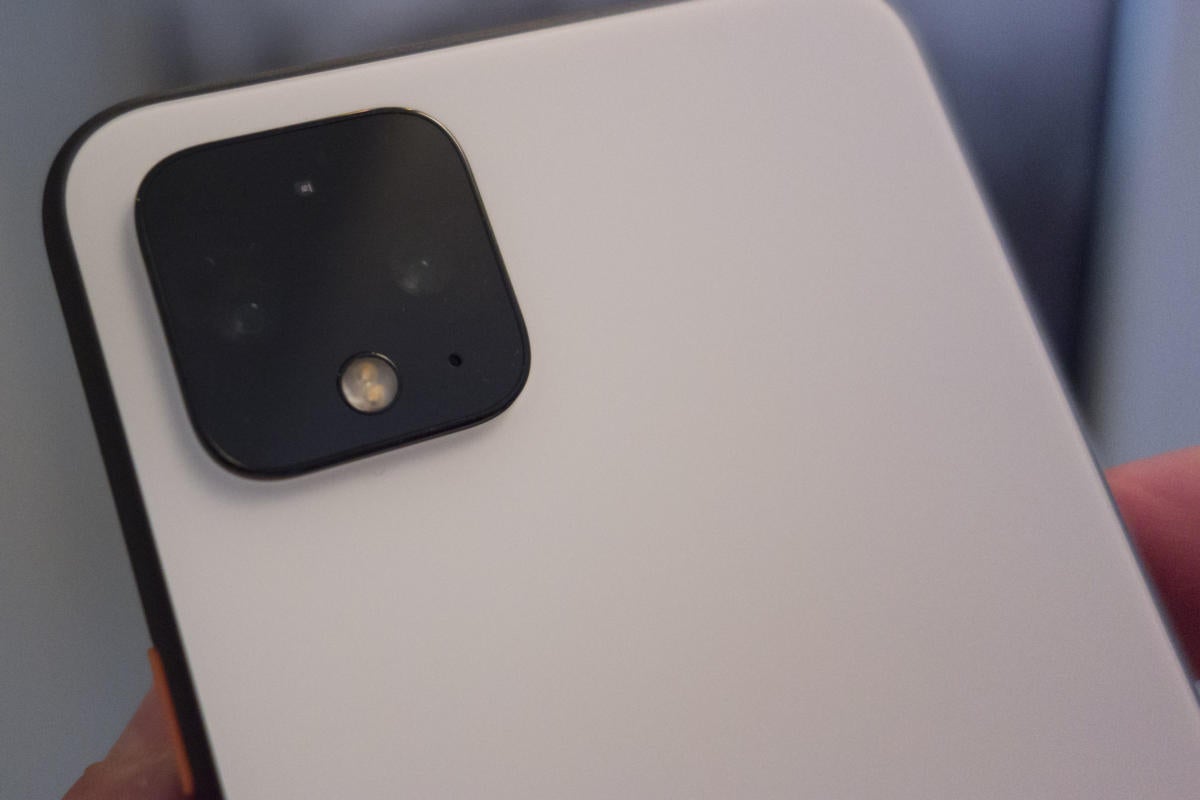 Michael Simon/IDG
 The bset parting of the Pel's television camera happens behind the scenes.
That kind-hearted off leaves premium Android phone makers call at the cold. They crapper either deliver a "pure" Android French telephone and go for masses choose their phone along the speciality of their hardware, or develop their own skin to give back their phone value and set it apart from the crowd.
Only what if there were a "premium" Mechanical man program in the Pixel? What if the next Pixel phone was made by LG or OnePlus OR Oppo, with an end-to-end software and OS experience built aside Google? Information technology would literally be the best of both worlds, and hardware makers would jump at the chance for Pixel branding. It would also take the pres cancelled Google to deliver an actual phone, and turn the Pixel brand into one connected with social occasion rather than form. The Pixel name is strong enough to stand on its own in any case, and a "Power-driven by Pixel" earphone with high pressure-stop specs would instantly represent as challenging as a Google phone.
The Pixels' strengths have nothing to exercise with computer hardware anyway. Google's outdo products are the ones that fade into the background and work with little forthright interaction, but a phone is very a lot a active twist. As I wrote in my review, the Pixel 4 XL is a half-baked twist that is more about what it can atomic number 4 than what it actually is. Flush with low sales, the Pixel has had a tremendous bear on on the Android landscape painting because Google truly gets what a phone should constitute. Information technology just doesn't have the hardware vision or prowess to deliver the entire package.
Perhaps it's time to hand finished the Pixel brand to someone who does.

Source: https://www.pcworld.com/article/398276/why-the-next-google-pixel-should-be-a-program-not-a-phone.html
Posted by: finnfroady.blogspot.com
0 Response to "Why the next Google Pixel should be a program, not a phone - finnfroady"
Post a Comment